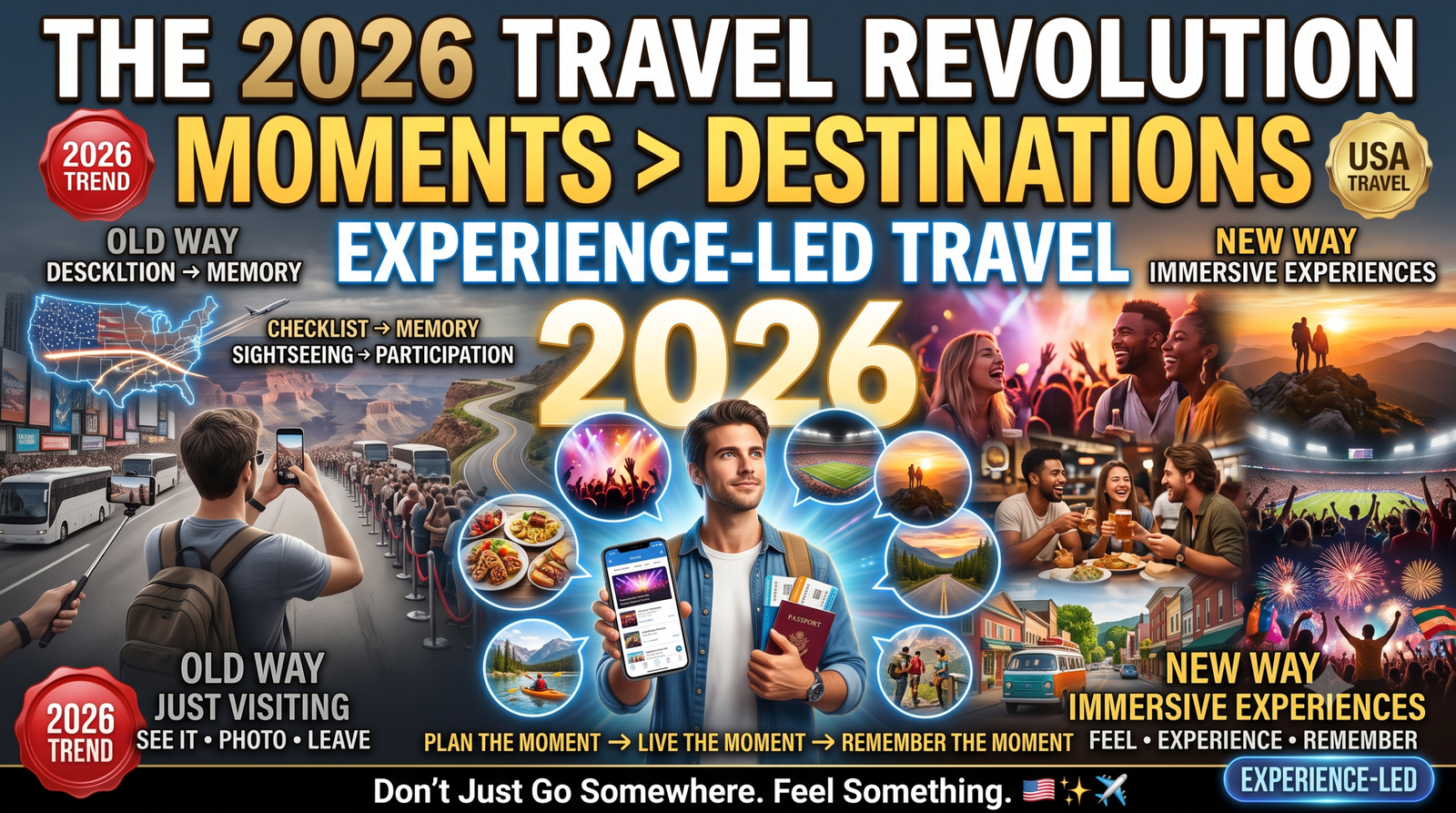
Introduction: The End of Destination-First Travel
Travel planning has fundamentally reversed. A decade ago, travelers chose a destination—Paris, New York, or Cancun—and then looked for things to do once they arrived. In 2026, that equation has flipped entirely.
Today’s travelers start with the experience: the concert, the food tour, the festival, or the hiking trail. The destination becomes the frame around that moment, not the centerpiece itself . This shift—called the “experience gap”—represents one of the most significant transformations in modern American travel behavior .
For your audience at tourrloop.com, this trend presents a powerful opportunity. Travelers are spending more on experiences, cutting back on shopping and material purchases, and booking trips built around specific activities rather than hotel addresses . By 2026, according to American Express Travel, travelers are increasingly motivated by discovery, cultural immersion, and personal relevance—seeking deeper value beyond the destination itself .
This guide covers the most significant experience-led travel trends for 2026:
- Why experiences now drive destination choice
- The top experience drivers for American travelers
- Major U.S. cities benefiting from this shift
- How remote work and AI are reshaping travel planning
- Practical strategies for building experience-first itineraries
Part 1: The Experience Gap—Why Activities Matter More Than Destinations
What Is the Experience Gap?
The experience gap describes the space between old-school travel planning—where the place came first—and modern planning, where the moment comes first . Travelers used to pick a famous place, then figure out what to do after booking it. Now many people start with the highlight—the cooking class, the concert, the snorkeling trip—and build the entire trip around it .
This shift changes how success gets measured. A vacation feels memorable because of the sunset sail, the food tour, the reef exploration, or the festival weekend, not only because of the hotel address . As Tripadvisor’s 2026 Trendcast points out, meaningful experiences are now a major driver of travel decisions .
Why This Trend Is Stronger in 2026
Several forces are driving this shift simultaneously:
AI Tools: Travelers now use artificial intelligence to find tours, compare attraction options, and piece together day-by-day plans faster than before. In 2026, 91% of global travelers use AI for trip planning tasks such as research, translation, organizing itineraries, and budget management .
Younger Traveler Values: Gen Z and Millennial travelers increasingly want trips that reflect who they are, what they care about, and how they want to spend their time. Sustainability, local culture, and purpose matter more to this generation than to older groups . According to Klook’s Travel Pulse 2026, 88% of global travelers plan to increase or maintain their travel budgets—cutting back on shopping and material purchases rather than activities and experiences .
Social Media Influence: Social content now functions as a trust-builder, giving travelers the confidence to explore new destinations and pursue experiences. A ten-second clip of a market, trail, or boat trip can inspire a booking faster than a hotel photo ever could . 80% of global travelers say social media actively influences the destinations or experiences they book .
The Shift in Traveler Mindset
People now think about trips differently. They say, “We’re going for the food scene,” or “We booked it for the snorkeling,” or “We had to be there for the festival weekend” . The destination still matters, but it plays a supporting role.
Travelers are also viewing trips as personal investments. Instead of cutting back on travel during economic uncertainty, they are spending smarter—prioritizing richer experiences, flexible itineraries, and deeper discovery. As Marcus Yong, Vice President of Global Marketing at Klook, puts it: “They seek experiential value that goes far beyond simply ticking destinations off a checklist” .
Part 2: What Experience-Driven Travelers Actually Want
Top Experience Drivers in 2026
According to industry data, experience-driven travelers are motivated by specific types of activities :
| Experience Type | Share of Travelers Interested |
|---|---|
| Ticketed Events and Concerts | 57% |
| Sports Events and Tournaments | 38% |
| Cruises and Expeditions | 38% |
| Hobby and Activity-Based Travel | 36% |
| Wellness and Spa Retreats | 32% |
Concert tours and music festivals rank highest, with sports championships and cultural festivals also exerting strong influence on travel decisions .
Why Travelers Cut Shopping, Not Experiences
Klook’s research reveals a clear shift in how travelers prioritize spending. When faced with rising costs, travelers are choosing to cut back on shopping and material purchases rather than on activities and experiences . The generation that grew up online is choosing to log off and lean into the world.
This pattern is pronounced among younger travelers. Rather than luxury shopping districts, they book multi-city rail passes. Instead of five-star splurges, they choose boutique stays that promise authenticity. Guided bus tours are being replaced by immersive workshops and locally led experiences .
The Drivers of Exploration
When travelers choose to venture beyond mainstream destinations, they cite three primary motivators :
- Authentic local experiences (42%): Travelers want to connect with local culture and communities
- Discovering hidden gems (39%): The appeal of finding something unique and off-the-beaten-path
- Affordability (37%): Lesser-known spots often offer better value
Discovery is no longer driven by novelty alone, but by values, access, and depth .
Part 3: Major U.S. Cities Benefiting from Experience-First Travel
Las Vegas, Nashville, Los Angeles, and Chicago Lead the Way
Major American cities are emerging as natural beneficiaries of the experience-first travel movement. These destinations possess the infrastructure necessary to capitalize on growing demand for event-centered travel—airports, hotels, restaurants, entertainment venues, and transportation networks aligned around supporting visitors whose trips are organized around specific experiences .
| City | Primary Tourism Strength |
|---|---|
| Las Vegas | Entertainment and Luxury Travel |
| Nashville | Music Tourism |
| Los Angeles | Entertainment and Cultural Experiences |
| Chicago | Festivals and Sports Tourism |
| Miami | Events and Cruise Tourism |
| New York City | Live Entertainment and Cultural Tourism |
Las Vegas continues to attract visitors through world-class entertainment residencies, sporting events, and luxury hospitality offerings. Nashville remains a magnet for music-focused tourism, while Los Angeles leverages its entertainment ecosystem and cultural attractions. Chicago’s diverse festival calendar and sports culture further strengthen its appeal among experience-seeking travelers .
Sports Tourism as a Travel Catalyst
Large-scale sporting competitions and international tournaments are influencing travel patterns as fans increasingly travel significant distances to attend events. The growing popularity of sports tourism highlights how experiences now serve as powerful travel catalysts capable of generating substantial economic impact for host destinations .
The influence of sports-related travel extends beyond ticket sales, driving hotel occupancy, restaurant spending, transportation demand, and local economic activity .
The Multi-Destination Mindset
Rather than choosing between familiar destinations and new ones, travelers are increasingly doing both in the same trip. Two-thirds of travelers plan to visit multiple destinations per trip, marking a clear shift away from single-stop itineraries. Major cities are no longer the end goal—they are gateways that allow travelers to extend their journeys beyond familiar destinations .
APAC Gen Z travelers are leading this shift, favoring faster-paced, densely packed itineraries and actively venturing beyond mainstream hotspots . This pattern extends beyond Asia, with emerging destinations gaining traction among travelers seeking differentiation over repetition .
Part 4: How Remote Work and AI Are Reshaping Travel
The Work-Leisure Blend
Remote work flexibility remains an influential factor shaping travel behavior in 2026. According to industry data, 31% of travelers are now combining work and leisure, while 28% are working remotely while traveling .
This trend effectively expands the traditional vacation model, allowing travelers to remain productive while exploring new destinations. The growing appeal of the digital nomad lifestyle further illustrates the changing relationship between work and travel. As technology enables greater location independence, destinations that offer strong connectivity, quality accommodations, and appealing lifestyle amenities are increasingly attracting long-stay visitors .
AI as a Travel Planning Tool
Artificial intelligence has rapidly emerged as a travel planning tool, now widely used by 91% of global travelers. However, its role remains largely functional rather than inspirational . The most common use cases for AI are trip-related tasks such as:
- Researching destinations and activities
- Translation
- Organizing itineraries
- Budget management
Together with social media, this creates a powerful loop: social content sparks the initial travel desire, and AI helps travelers apply practical filters—affordability, ease of getting around, time required—before committing. This signals a definitive shift from viral inspiration to validated discovery .
Personalization and Curated Experiences
Travelers increasingly expect tailored recommendations and curated itineraries that align with their individual preferences and interests . The days of one-size-fits-all travel packages are fading. Instead, travelers seek experiences that feel distinctive, personal, and meaningful .
Part 5: Experience-First Itinerary Planning for 2026
How to Build an Experience-Led Trip
When travelers plan around activities, the destination becomes a tool rather than the goal. Here’s how to build a trip that maximizes memorable moments :
Step 1: Start with the experience
Identify what matters most—a concert, a food tour, a hiking trail, a festival. Let that anchor the entire trip.
Step 2: Choose the destination to support the experience
The location should enable the activities, not define them.
Step 3: Prioritize spending on moments
Redirect budget from luxury accommodations to immersive activities. A comfortable room matters, but the stories travelers tell afterward come from what they did .
Step 4: Build in flexibility
Successful experience-led trips leave room for spontaneous discovery alongside planned highlights.
Strategies for Smarter Travel Spending
Based on Klook’s Travel Pulse 2026 findings :
- Cut shopping, not experiences: Redirect material purchase budgets toward tours, classes, and activities
- Book early: With 61% of travelers planning international trips in the first half of 2026, early booking secures better availability and prices
- Consider lesser-known destinations: Hidden gems offer authentic experiences at better value
- Plan multi-destination trips: Combine anchors and new discoveries in a single journey
FAQ: Your 2026 Experience-Led Travel Questions Answered
What is the “experience gap” in travel?
A: It’s the shift from choosing a destination first and finding activities later, to choosing activities first and selecting a destination to support them. Modern travelers prioritize moments over locations .
What experiences are most popular in 2026?
A: Ticketed events and concerts (57% of travelers), sports events and tournaments (38%), cruises and expeditions (38%), hobby-based travel (36%), and wellness retreats (32%) .
Which U.S. cities are leading the experience-first trend?
A: Las Vegas (entertainment/luxury), Nashville (music tourism), Los Angeles (cultural experiences), Chicago (festivals/sports), Miami (events/cruises), and New York City (live entertainment) .
How is AI changing travel planning?
A: 91% of travelers now use AI for trip-related tasks like research, translation, itinerary planning, and budget management. Social media inspires the trip, and AI validates the practical details .
Are travelers spending more or less in 2026?
A: 88% of global travelers plan to increase or maintain their travel budgets. They are cutting back on shopping and material purchases rather than activities and experiences .
What drives travelers to explore lesser-known destinations?
A: Authentic local experiences (42%), discovering hidden gems (39%), and affordability (37%) are the top motivators .
Conclusion: The Moment Is the Destination
2026 marks a turning point in American travel. The destination-first era is giving way to something more personal, more intentional, and more memorable. Travelers are no longer asking, “Where should we go?” They’re asking, “What should we do?”
This shift offers extraordinary opportunities for tourrloop.com to connect with a new generation of travelers who value:
- Authentic experiences over luxury addresses
- Immersive activities over shopping
- Discovery over repetition
- Purpose over checklist tourism
The United States offers unparalleled diversity for experience-led travel—from Nashville’s music scene to Las Vegas’s entertainment residencies, from Chicago’s festivals to Los Angeles’s cultural attractions . With 88% of travelers maintaining strong travel budgets and prioritizing experiences over material goods, 2026 is the year to build trips around moments that matter .
Ready to plan your experience-led USA journey? Visit tourrloop.com for curated tours, insider itineraries, and exclusive packages that make every trip count.
Your next great American experience starts today.
Word Count: ~2,150
Target Keywords: experience-led travel 2026, USA travel trends, event tourism, music tourism USA, sports tourism, American travel spending, travel experiences, hidden gems USA, multi-destination travel, AI travel planning, remote work travel